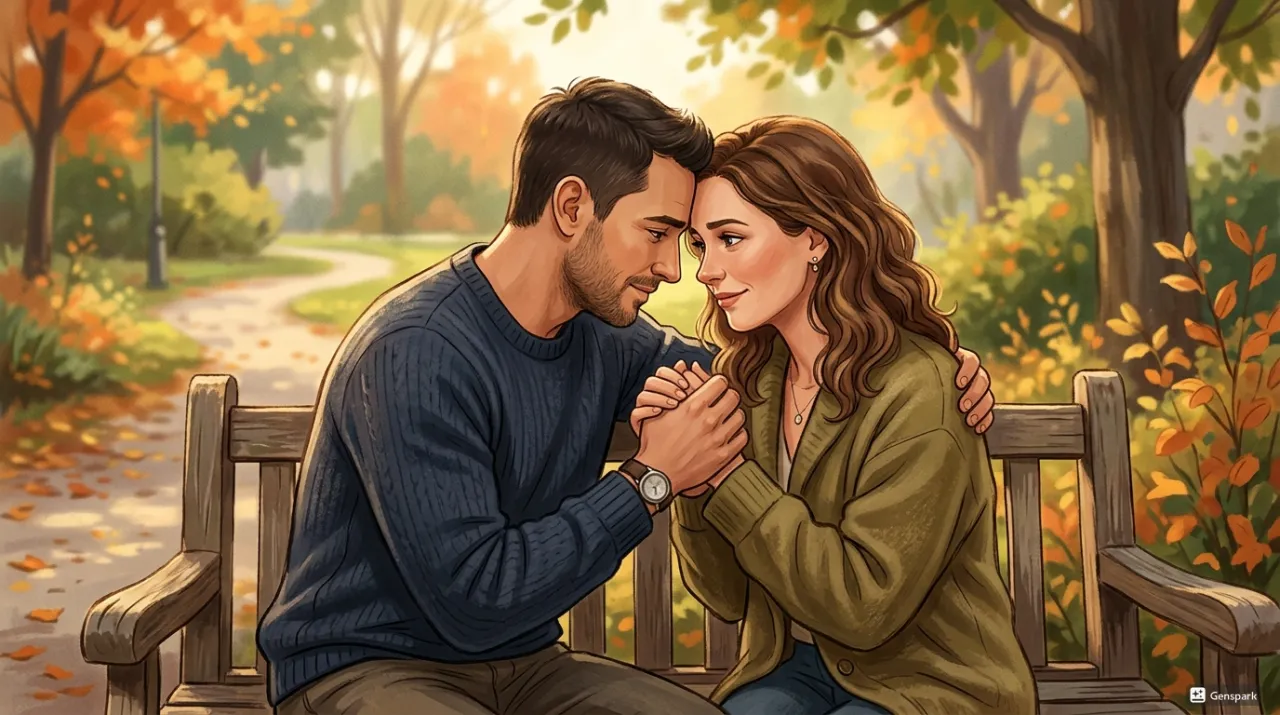
Maybe what remains is not only that person, but who I was back then
First love has a strange way of staying with us.
Even after many years, a song can suddenly bring back the air of that time. A familiar scent can make you turn your head for no reason. An old school uniform, a worn backpack, or a photo from that period can make your heart pause for a moment.
Your life may be completely different now. You may not want to meet that person again, and you may not want to go back to that time. Still, scenes from a first love often remain clearer than many relationships that came after it.
I used to think it was simply lingering attachment.
Maybe I had not forgotten. Maybe that person really was special. Maybe I was remembering the past because my present relationship was missing something.
Over time, I began to see it differently.
First love does not stay with us only because that person was perfect. It stays because it was not only the memory of loving someone, but also the first time we discovered what kind of person we became in front of love.
The first time you waited for someone. The first time a reply changed your whole day. The first awkward moment of holding hands. The first night when rejection or distance felt like the end of the world.
A first love does not leave only the other person behind.
It leaves your younger self behind, too.
Maybe that is why first love feels like an old drawer we keep opening from time to time.
An old song once brought the whole period back
Once, I was sitting in a cafe when a song I had listened to long ago started playing.
It was not a special song. It was just a popular ballad from that time, the kind that might even sound a little dated now. But as soon as the intro began, my heart reacted before my thoughts did.
I remembered the street I used to walk while listening to it. I remembered waiting outside a school or academy late in the evening, holding my phone tightly in my coat pocket, pretending to check a message casually even though I had been waiting for it.
More than that person's face, I remembered myself back then.
A single text could make my entire day feel brighter. One careless sentence from that person could replay in my head for hours. The possibility of running into them was enough to make me choose my clothes more carefully than usual.
Looking back, it was clumsy, intense, and a little embarrassing.
But I do not hate that version of myself.
I did not know much because it was my first time, and because I did not know much, everything felt bigger. I held onto small words for too long, gave large meanings to tiny kindnesses, and felt shaken by ordinary silence.
First love stays not only because the person was the best person in my life.
It stays because my heart was experiencing everything for the first time.
First love makes us remember not just romance, but our first self in love
When we think of first love, we often believe we are remembering the other person.
But if we look closely, that memory contains more than the other person.
It also contains who we were, what we waited for, what made us excited, and what broke us.
First love usually comes when we still do not fully know ourselves.
What kind of person am I drawn to? How do I act when I feel loved? Do I speak up when I feel hurt, or do I hold it in? When someone becomes distant, do I reach out, or do I stay silent out of pride?
Many people first discover these things through first love.
That is why first love is not only remembered as “I liked that person.”
It is also remembered as “That was when I first saw what I was like in love.”
When I think about my first love, I often remember my own behavior before I remember the other person. I remember pretending to be fine while waiting for a reply. I remember smiling as if nothing mattered, then going home and replaying the same conversation again and again. I remember being too afraid to ask clearly and reaching conclusions alone.
I was far less mature then.
But that younger self taught me things later.
I learned that I become anxious around emotionally distant people. I learned that the more I care, the more careful I become with my words. I learned that ambiguity can keep me attached longer than rejection.
First love was a memory of another person, but it was also the first event that revealed my relationship patterns.
Unfinished stories tend to stay longer
One reason first love stays so long is that it often does not end clearly.
When we are young, we are not good at ending relationships. Sometimes we never confess. Sometimes both people have feelings, but the timing is wrong. Sometimes contact fades little by little until the relationship disappears without a proper ending.
A relationship that ends without being named as an ending can stay in the mind for a long time.
One acquaintance once told me, “We never even dated, but I still think about that person sometimes.” They had been in the same class, saw each other every day, and everyone around them could tell there was something there. But neither of them confessed.
They said goodbye on graduation day and went separate ways. For years after that, the person still appeared in their dreams once in a while.
It was probably not because they still loved that person.
It was because the story had never been completed.
“What if I had confessed then?” “What if I had been honest one more time?” “Did that person really like me too?”
Questions like these can reopen even after many years.
A story that is fully over can be closed. But a story that passed without a clear ending often continues in the mind.
Over time, memory also edits itself.
Awkward moments, frustration, and hurtful words fade, while the beautiful scenes remain sharper. The imagined possibility can become larger than the person as they really were.
That is why an unfinished first love can remain more beautiful than an actual relationship.
An unrealized possibility never has to face the disappointments of reality.
Remembering first love does not mean your current love is lacking
Some people feel guilty when they think of their first love.
Why do I remember that time when I am with someone now? Does this mean I am not satisfied with my current relationship? Do I still have feelings left?
But remembering first love does not necessarily mean your current love is lacking.
Just as an old song can bring back a certain period of your life, first love can return as a memory of a specific version of yourself.
Often, you are not missing the person as much as you are remembering who you were then.
The version of you who loved without knowing much. The version of you who felt thrilled by small things. The version of you who acted awkward because you could not hide your feelings. The version of you who cried as if the world had ended after a first heartbreak.
First love is saved under someone else's name, but it often contains your younger self.
That is why first love can come to mind even while you sincerely love your current partner.
The problem is not that the memory appears.
The problem begins when you use that memory as the standard for your current relationship.
“Back then, I felt more excited.” “That person used to say things like this.” “Why does this relationship feel so realistic?”
When this comparison begins, your current relationship is forced into an unfair contest.
First love is an edited memory. Your current relationship includes tired days, differences in lifestyle, realistic conversations, and both people's flaws.
If you compare a highlight reel from the past with a living relationship in the present, the present will almost always seem less romantic.
First love can become the standard for later relationships
First love can influence later relationships.
This does not always mean you keep liking people who resemble that person. But the emotions you experienced in your first love can become a hidden standard for what love is supposed to feel like.
If your first love felt warm and stable, you may later recognize comfort as love.
If your first love was unstable and intense, you may later confuse anxiety with passion.
The nervous waiting for a reply, the relief when a cold person becomes warm again, the tension of not knowing where you stand—these can all be mistaken for love.
I once believed that being strongly shaken meant the love was more real.
The less certain I was about someone's feelings, the more I thought about them. A small piece of affection felt bigger when it was hard to get. But later, I realized that some of those feelings were not love. They were absorption created by anxiety.
The standard left by first love can help us, but it can also trap us.
What matters is noticing it.
Why am I drawn to this kind of person? Why do vague people affect me more than stable ones? Why do I become so anxious when someone seems indifferent? What image of love did my first love leave behind?
These questions can help you understand your current relationship patterns more clearly.
You can keep first love beautifully, but it should not blur the present
You do not need to force yourself to forget your first love.
It is natural for that memory to remain. First experiences are often stored in a special way.
The first person you liked. The first night you waited. The first time you held hands. The first heartbreak that made your chest hurt.
Memories like these do not disappear completely.
But you do not need to make that memory perfect.
Your first love was probably clumsy in reality, too. There were misunderstandings, unspoken feelings, flaws in the other person, and immature reactions from you.
As time passes, we often hold onto only the prettiest scenes.
So when first love feels too perfect, it can help to look at the memory more realistically.
Was that person truly perfect? Or am I preserving the emotion of that time beautifully? If that relationship started again now, would it really make me happy? Or was it only possible because we were who we were back then?
First love can remain a beautiful memory.
But it should not become the ruler you use to measure the person beside you now.
Past memories are useful for understanding who we were. They are not meant to rank the people in our present.
The MATE test can help you look back on your relationship patterns
When we think about first love, we are not only thinking about one person from the past.
We also see how we began love, what kind of person we were drawn to, when we became anxious, and what we expected from relationships.
The MATE test can help you reflect on these patterns.
Do you feel secure when you are frequently connected, or do you need time alone to feel comfortable? Do you need to resolve conflict quickly, or do you need time to organize your feelings? Do you feel safer when a relationship is planned and structured, or do you prefer a more natural flow?
Knowing these differences can help you see the relationship standards that may have formed after your first love.
A test cannot explain the meaning of your first love for you.
But it can become a starting point for questions like: Why do I remember this kind of love for so long? Why am I drawn to similar people? What kind of relationship makes me feel safe?
Understanding the past can help you make better choices in the present.
Closing: first love leaves not only that person, but the person you were
First love stays not necessarily because that person was the most special person in your life.
It stays because it was the first.
For the first time, you waited for someone for a long time. For the first time, one small sentence changed your whole day. For the first time, you could not hide your feelings. For the first time, you discovered how vulnerable you could become in front of love.
First love is a memory of another person, but it is also the first memory of yourself standing before love.
That is why it does not disappear easily.
But the fact that first love remains does not mean your current love is lacking. A beautiful past does not make the present less precious.
What matters is how you handle that memory.
If you turn first love into an idealized standard, your current relationship may always seem smaller. But if you use first love to understand what kind of person you are, you can look at your present relationships more maturely.
You were clumsy then. You were shaken easily. You failed to say many things clearly.
Still, because of that experience, you now know a little more.
What kinds of words move you. What kinds of relationships make you anxious. What kinds of love you tend to hold onto. And how you want to love from now on.
First love may be a relationship that ended.
But if that memory helps you understand yourself better, it is not merely lingering attachment. It can be part of the history of your heart.
You might also enjoy:
Frequently Asked Questions
Q. If I remember my first love for a long time, does that mean I still have feelings?
Not necessarily. First love often contains not only the person but also your emotions and your younger self from that time. Remembering it for a long time does not automatically mean you still love that person.
But if the memory keeps making you compare your current relationship or prevents you from opening your heart to someone now, it may be worth looking at whether some unresolved feeling remains.
Q. Should I feel guilty if I think of my first love while I have a partner?
No. Just as an old song or place can bring back the past, first love can appear as a memory of a specific time in your life.
What matters is not using that memory as the standard for your current relationship. First love is an edited past, while your current relationship is something you are still building in reality.
Q. My first love feels too beautiful in my memory. Is it idealized?
It may be. Over time, people often remember the good moments more clearly than the difficult ones.
When you think of your first love, try also remembering what was awkward, what was left unsaid, and what hurt you. This can help make the memory more balanced and realistic.
Q. I keep being attracted to people similar to my first love. Is that normal?
It can be natural. First love can leave behind a quiet standard for what love feels like.
But if that standard repeatedly leads you into anxious relationships, it is worth reflecting on it. Are you drawn to that person's traits, or are you drawn to familiar anxiety and tension? Noticing the pattern is the first step.
Q. How can I handle memories of first love in a healthy way?
Rather than forcing yourself to forget, try asking what the memory tells you about yourself.
What kind of person were you drawn to? When did you become anxious? What did you regret not saying? What did that experience teach you to value in relationships? First love can be a clue to understanding your relationship patterns.