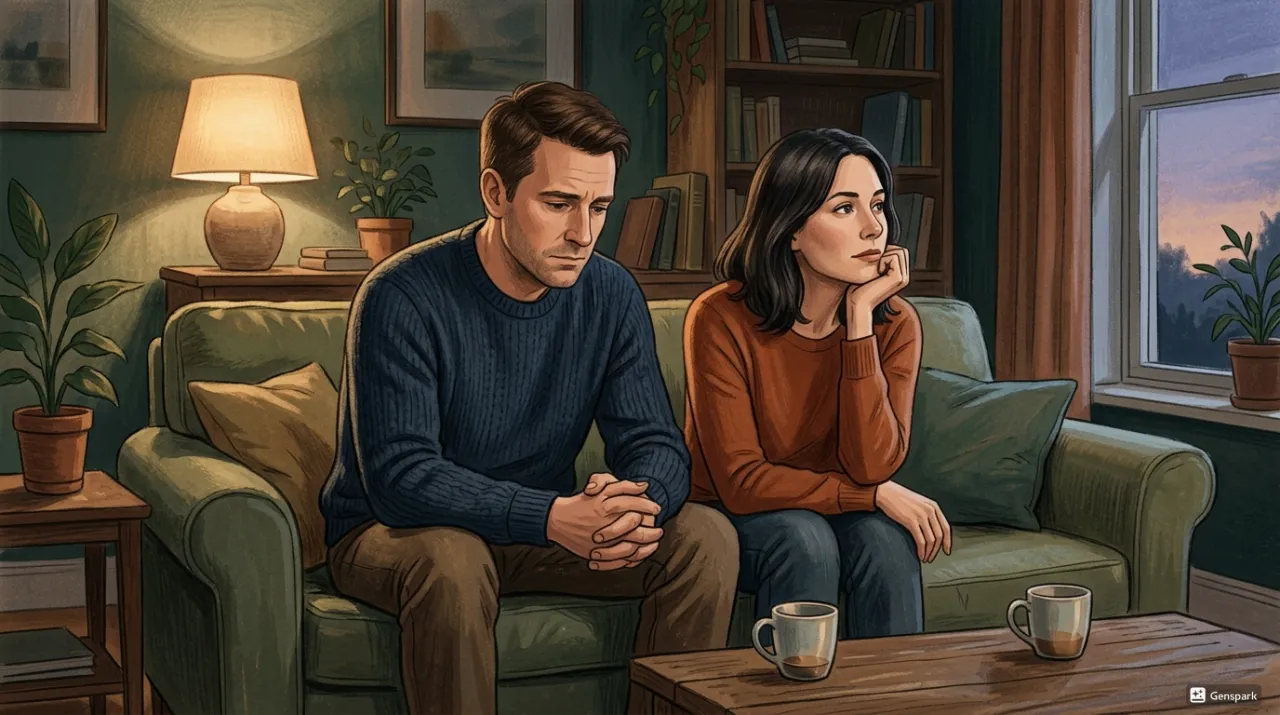
“Do I like this person less now?”
Anyone who has been in a long-term relationship has probably had this thought at least once. Nothing dramatic has happened, but the relationship no longer feels as thrilling as it used to. A message from your partner does not make your heart race. Weekend dates feel more like a familiar routine than something you look forward to. Even when you are together, you do not laugh as easily as you once did.
The strange part is that you do not necessarily dislike your partner.
You do not exactly want to break up, but the relationship no longer feels hot and intense. Being together is comfortable, but that comfort starts to feel confusing. Is this love, or just habit? Your partner has not done anything terrible, and the relationship is not obviously broken, yet the questions keep coming up.
“Is this relationship boredom?” “Has my love faded?” “Should I keep going?”
I have heard this worry from many people around me, especially from couples who had been together for a long time. The early excitement had faded, and they did not know what to do with the empty space it left behind.
One friend once said while sitting in a café with their long-term partner:
“I used to feel happy just seeing them walk through the door. These days I just think, oh, they’re here. It makes me feel like a bad person.”
That sentence stayed with me.
They were not a bad person. The relationship may simply have been moving into a different stage. The problem is that when we mistake that transition for the end of love, the relationship can become unnecessarily unstable.
This article is not saying that every period of boredom is harmless. Sometimes boredom does mean the relationship is fading. But sometimes it simply means familiarity has grown deeper than excitement. The important thing is learning how to tell the difference.
Relationship boredom did not arrive all at once
Boredom in a relationship rarely appears overnight.
In the couples I have seen, it usually started with small changes. They used to be curious about each other’s day, but at some point “How was your day?” became a formal question. Choosing a date spot used to feel fun, but later it became “Should we just go there again?”
At first, both people ignored it.
“We’ve been together for a long time. This is normal.” “We’re just busy these days.” “No one feels butterflies forever.”
Those words are partly true. Expecting a long-term relationship to feel like the first few weeks forever is unrealistic.
But the issue is not the fading of excitement itself. The issue begins when both people avoid talking about the change.
One couple I knew followed almost the same weekend routine every week. Lunch, café, movie, or resting at home. At first, the routine felt comforting. Over time, comfort started to feel like dullness.
But neither of them said it directly.
“I think we’re becoming a little repetitive.” “Maybe we should try something new.” “I feel a bit numb when we’re together lately.”
They avoided saying these things because they did not want to hurt each other.
So the boredom grew quietly inside, while on the outside they still looked like a normal couple. Then one day one of them finally said:
“Don’t you think we’ve become a little boring lately?”
The other person immediately became defensive.
“So being with me is boring?”
The conversation became difficult in that moment.
What they had wanted to say was not, “I don’t want to be with you.” It was closer to, “Our relationship needs some fresh air.” But when this conversation happens too late, it can easily sound like rejection or a sign of breakup.
Less excitement does not always mean less love
Early-stage romance is powerful.
A message from your partner makes you happy. You imagine the next time you will see them. Small words stay in your mind for days. Their taste, voice, expressions, and habits all feel new.
At that stage, the relationship seems to move on its own. You do not have to try hard to miss them, wonder about them, or want to be kind to them.
But over time, that intensity naturally decreases.
The voice that once felt charming becomes familiar. The habits that once felt fascinating become expected. Dates that once felt exciting become part of everyday life.
This is when many people panic.
“Why doesn’t my heart race anymore?” “Are they no longer special to me?” “Has my love faded?”
But when I look at couples who stay together well, I often see another emotion replacing the early thrill.
Comfort. Trust. Stability. A sense that this person is on my side. The feeling that I do not need to explain everything from the beginning.
This is different from early excitement, so it may feel less dramatic. But it is not less important.
One friend said after moving through a period they thought was boredom:
“I don’t feel butterflies like I used to, but when something hard happens, they are still the first person I think of.”
That sentence captures the difference between excitement and love.
Fewer butterflies do not always mean love is over. Sometimes love has simply changed shape.
Familiarity and indifference are not the same thing
The most confusing part of relationship boredom is telling the difference between familiarity and fading love.
They can feel similar because both involve less excitement than the early stage. But they are not the same.
In a familiar but loving relationship, excitement may be lower, but the person still matters. You worry when they are sick. You want to hear about difficult days. Imagining a breakup feels uncomfortable. Time together may not be thrilling, but imagining life without them leaves a real emptiness.
In a relationship where feelings are truly fading, you may no longer feel much curiosity about their life. Their sadness may not move you. Plans with them may feel only burdensome. When you imagine breaking up, you may feel more relief than grief.
This difference matters.
Some people think they are in relationship boredom when they are actually mistaking familiarity for the end of love. Others call it boredom when their feelings have already moved far away.
So before making a decision, it helps to ask yourself:
“Do I dislike this person, or am I tired of our repeated pattern?” “What do I feel when I imagine life without them?” “Do I still care how they are doing?” “If we spent time together differently, could I imagine feeling closer again?”
These questions can make the emotion clearer.
The real cause is often a repetitive life together
In many couples I have seen, boredom was not caused by the partner as a person. It was caused by a repeated pattern.
The same meeting time, the same neighborhood, the same food, the same conversations, the same way of saying goodbye.
At first, that routine provides stability.
“We have our own rhythm.” “This feels comfortable.” “We’re used to each other now.”
But at some point, that stability can start to feel like stagnation.
One couple went to almost the same restaurant area every Saturday evening. They both liked it at first. Then one day, one of them said:
“I think we always talk about the same things.”
The other person laughed it off.
“That’s what happens when you date for a long time.”
That may be true, but there was also a signal inside that sentence. The relationship had become a little too repetitive.
Long-lasting couples do not need constant novelty. But when a relationship becomes too fixed, it becomes harder to discover anything new about yourself inside it.
The beginning of love feels powerful partly because you enter a new world through another person: new music, food, places, thoughts, and habits. As you get to know them, your own world expands.
But after a while, everything can become predictable.
“I feel like I’ve already done everything with this person.” “I already know what they’re going to say.” “Our dates are always the same.”
When this feeling builds, it can feel like relationship boredom.
To move through it, you do not always need a huge trip or a grand event. You need small forms of newness.
Walking through an unfamiliar neighborhood. Trying a new activity together. Cooking something you have never made before. Asking each other about current interests again. Meeting at a different time of day. Sharing something each of you recently became curious about.
Small changes can shift the air inside a relationship.
Feeling drawn to someone else does not always mean the relationship is over
One of the most confusing moments during relationship boredom is noticing someone else.
Someone’s tone, energy, or conversation feels fresh. A person you talk to easily makes you feel awake again. Then guilt and fear appear together.
“Does this mean I don’t love my partner anymore?” “Is being attracted to someone else proof that this relationship is over?”
This should not be taken lightly. Sometimes attraction to someone else does happen because the current relationship has truly faded.
But not every attraction is a breakup signal.
During a bored phase, newness itself can feel powerful. The more familiar and repetitive your current relationship feels, the more stimulating a new conversation can seem.
The danger is mistaking newness for true love.
One friend once felt drawn to someone at work during a period of boredom in their relationship. That person felt fresh, and my friend said they felt attractive again when talking to them. Later, after some time, they realized that the attraction was not only about that person. It was also about feeling stuck in the same role inside their long-term relationship.
With their partner, they felt like the same version of themselves all the time. With someone new, they felt like a different version of themselves could appear.
In that moment, the right question may not be, “Who do I like more?”
It may be:
“Am I drawn to this new person, or am I drawn to feeling new again?” “Do I feel too fixed inside my current relationship?” “Have I tried creating newness with my partner?”
Those questions may need to come first.
What actually helped couples move through boredom
The things that helped were usually not dramatic solutions.
The first was naming the problem honestly.
If you say, “I think my feelings for you are fading,” your partner may feel deeply hurt. But if you say, “I feel like our relationship has become a little repetitive lately,” there is room for conversation.
The direction of the words matters.
Do not turn your partner into the problem. Look at the state of the relationship together.
Instead of “Being with you is boring,” try: “We’ve been staying in the same pattern lately.”
Instead of “It doesn’t feel like before,” try: “I think we need a little new energy between us.”
Then boredom becomes something to handle together, not an accusation.
The second was adding small new experiences.
You do not need an expensive trip. Small, realistic changes often help more.
Go to a neighborhood you do not usually visit. Change your walking route. Make playlists for each other. Share a book, video, or topic you recently liked. Grocery shop together and cook something you have never made.
Small novelty does not fix everything, but it gives the relationship room to breathe.
The third was saying thank you again.
Long-term couples often stop noticing what they once appreciated.
Coming to pick you up. Adjusting schedules. Listening when tired. Remembering what you like.
What once felt touching becomes the default.
That is when relationships become dry.
“Thank you for coming today.” “I felt good when you listened earlier.” “I liked that you remembered that.”
Small words like these raise the temperature of the relationship.
The fourth was not neglecting physical closeness.
During boredom, physical touch often decreases. Holding hands feels less natural. Hugs become shorter. Sitting close happens less often.
But when physical distance grows, emotional distance can feel larger too.
It does not need to be dramatic.
Hold hands while walking. Give a proper hug when saying goodbye. Sit a little closer on the couch. Touch your partner’s shoulder lightly.
Small touch can restore safety before words do.
The fifth was supporting each other’s growth.
Boredom can happen because the relationship feels too familiar, but it can also grow when each person feels stuck.
Ask what your partner is interested in lately. Support what they are learning. Listen sincerely when something changes in work or hobbies.
“How is that thing going?” “Did you try what you mentioned before?” “I thought it was great that you started that.”
This kind of attention helps you see your partner as someone still becoming new.
The MATE test can help you understand where boredom is coming from
Relationship boredom is not always just a loss of excitement.
Sometimes it is the result of repeated differences in how two people relate.
One person needs closeness to feel secure, while the other needs alone time to recharge. One person likes planned dates, while the other wants spontaneous change. One person wants to resolve conflict immediately, while the other needs time before talking.
When these differences remain unnamed, couples can easily misunderstand each other.
“Why do I feel like I’m the only one trying?” “Why is this relationship becoming boring?” “Why do we feel distant?”
The MATE test can be a starting point for talking about these differences.
By looking at closeness, communication style, life rhythm, and relationship operation style, you may see that boredom is not simply an emotional problem but a pattern problem.
The test will not solve boredom for you. But it can help turn a vague worry like “Have we fallen out of love?” into a more specific conversation: “We seem to feel secure in different ways.”
Signs of boredom that should not be ignored
Not every bored phase is natural and harmless.
Sometimes it is a real sign that the relationship is ending.
You no longer wonder how your partner is doing. Their pain barely moves you. Time together feels only burdensome. You have no desire to try anything new together. Imagining a breakup brings more relief than sadness. You no longer feel much respect for them.
If this is the case, it may be difficult to dismiss it as simple boredom.
Boredom can be worked through when there is still some desire to reconnect. But if even that desire is nearly gone, it may be a different issue.
So the important thing is to be honest.
“Do I want to try reviving this relationship?” “Do I dislike this person, or have we simply repeated the same pattern for too long?” “Do I still have the will to make an effort?”
These questions matter.
Closing: relationship boredom can be a transition, not an ending
I used to think boredom meant love was over.
If I did not feel butterflies, love had faded. If I did not miss someone like before, my heart had changed. If someone else caught my attention even slightly, something was wrong.
But watching long-term couples changed my mind.
Boredom can mean the end of love, but it does not always mean that. Sometimes it is the process of a relationship moving into a different stage.
The early excitement fades, but comfort and trust may be growing. The old pattern may need to change. The relationship may need to be cared for more consciously instead of being taken for granted.
Couples who moved through boredom well did not simply wait for time to fix it.
They admitted that their relationship had become repetitive. They created small forms of newness. They said thank you again. Instead of only trying not to fight, they looked for ways to come closer again.
Boredom is not always a bad sign.
If ignored, it can push two people apart. But if examined honestly, it can become a turning point that deepens the relationship.
The important thing is not to stop at “Why doesn’t it feel like before?”
Ask instead:
“How have we become too familiar?” “What kind of newness does our relationship need?” “Do I still want to become close to this person again?”
If you can ask those questions together, boredom may not be the end. It may be a transition.
You might also enjoy:
- Why Some Couples Stay Happy for Years While Others Drift Apart
- Why Alone Time Can Help a Relationship
Frequently Asked Questions
Q. How can I tell the difference between relationship boredom and falling out of love?
The key difference is interest and willingness to reconnect. In boredom, excitement has decreased, but you may still care how your partner is doing and want to revive the relationship.
When love has truly faded, you may feel little curiosity about your partner, have little desire to repair the relationship, and feel more relief than sadness when imagining a breakup.
Q. When does relationship boredom usually happen?
It varies by person and relationship. Many people feel the early intensity soften after being together for a while. Some feel it within months, while others feel it years later.
The timing matters less than how the two of you talk and act when it happens. Feeling bored does not automatically mean the relationship is over.
Q. Is it strange to feel attracted to someone else during relationship boredom?
Not necessarily. When you have been inside a familiar relationship for a long time, a new person’s energy or conversation can feel more stimulating.
Before interpreting that attraction as love, ask whether you are drawn to that person specifically or to the feeling of newness that has been missing from your current relationship.
Q. Do we need a special event to overcome boredom?
No. Small and realistic changes can help more than a grand event. Try visiting a new neighborhood, doing a new activity together, or expressing gratitude in a specific way.
The core of moving through boredom is not creating one big event. It is putting attention back into the relationship.
Q. Won’t my partner feel hurt if I bring up relationship boredom?
The wording matters. Saying “Being with you is boring” can feel like rejection.
Instead, try saying, “I feel like our relationship has become a little repetitive lately. I’d like us to try something new together.” This frames the issue as something both of you can look at together, not as blame.