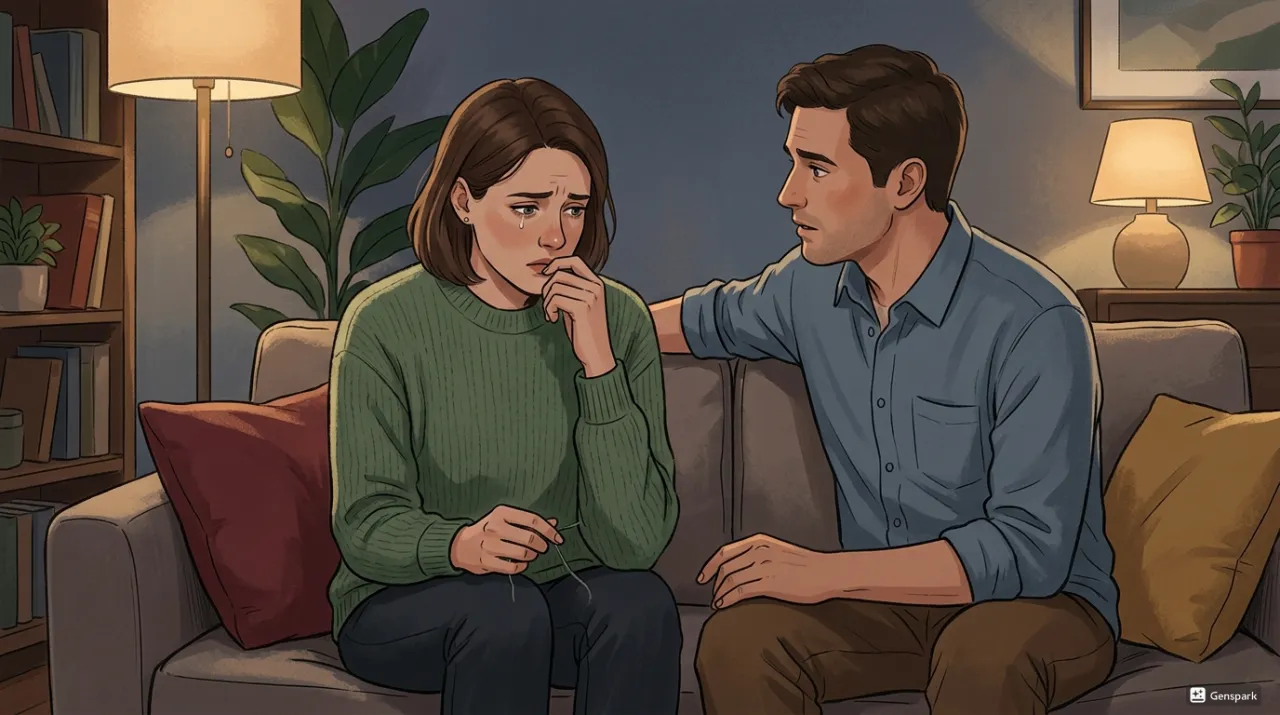
The words that stayed longer than the apology
In January 2024, I watched an acquaintance couple make up after a big fight. The fight itself had started with something very small. One person had been late to a plan, and it could have ended with a simple, “I’ll be more careful next time.”
But the apology went in the wrong direction, and the problem grew. The person who was late said, “I’m sorry, but you reacted way too sensitively too.” The first half of the sentence was an apology, but the second half was an excuse.
The person listening did not feel apologized to. They felt judged all over again. In the end, the couple fought longer about “the attitude behind the apology” than about the original issue. Watching that, I realized that an apology is not a phrase meant to end a situation quickly. It is a process of seeing exactly where the other person was hurt.
“I’m sorry.”
It is a short sentence. It takes less than a second to say.
But while dating, I learned that this short sentence is much harder than it looks.
I used to think of apologies very simply. If I did something wrong, I just had to say “I’m sorry,” and once the other person heard it, they should feel at least somewhat better.
So when the other person stayed upset, I felt frustrated inside.
“I already said I was sorry.”
“How long do we have to keep talking about this?”
“I apologized, so why are you still angry?”
Looking back now, I do not think I was really apologizing. I think I was trying to end the situation quickly.
It was not an apology that tried to see the other person’s heart. It was an apology that wanted to escape the awkward atmosphere. I did not say exactly what I had done wrong, and I did not listen enough to why the other person had been hurt.
I thought everything would be over once I said, “I’m sorry.”
But it was not over. In fact, some apologies made the relationship even more tangled.
There were especially a few phrases I used often.
“I’m sorry. But I had no choice.”
“I am sorry, but I think you were being too sensitive too.”
“Fine, I’m sorry. Happy now?”
At the time, I did not know that those words may sound like apologies, but to the person hearing them, they can feel like excuses or even attacks.
Through dating, I saw many differences between couples who apologize well and couples who do not. And while looking back on my own experiences, I learned this:
Couples who apologize well last longer not because they never hurt each other. They last because when they do hurt each other, they know how to come back to the same side.
This is not written by someone who apologizes perfectly. It is closer to a record written by someone who once said “I’m sorry” badly and made the other person feel even more hurt.
The moment I said “I’m sorry, but…,” the apology disappeared
There was one apology I used all the time.
“I’m sorry, but…”
Looking back, it was almost a habit.
If the other person said my tone had hurt them, I said,
“I’m sorry, but I was really tired then too.”
If I was late and the other person got angry, I said,
“I’m sorry, but something came up all of a sudden.”
If they said I had acted carelessly, I said,
“I’m sorry, but you should understand my situation too.”
From my point of view, I did feel wronged. I really had not done it on purpose, and I had my reasons.
So even while apologizing, I wanted to explain myself. I wanted the other person to know that I had not meant anything bad.
But from the other person’s side, it probably sounded different.
Most of what comes after “I’m sorry, but…” reduces the apology.
The apology was at the front, but behind it I was defending my action. It may have made the other person feel that my reasons mattered more than the pain they had felt.
Once, someone said this to me:
“When you say sorry, you always start explaining why you did it. Then it feels like my hurt gets pushed to the side.”
At the time, I felt a little unfairly accused. I thought, “Am I not even allowed to explain?”
But later, I realized they were right.
Explanation can be necessary. But the order matters.
The first thing to do is not to explain my situation. It is to acknowledge the wound the other person received.
“I was late, and I made you wait alone. I’m sorry.”
“My tone was too sharp. It makes sense that you were hurt.”
“I did not think enough about your position.”
Those words had to come first.
Only after that could explanation enter the conversation.
“Something did come up suddenly that day, but I still should have contacted you in the middle.”
“I was tired, yes, but that did not make it okay for me to speak sharply to you.”
When I say it that way, the explanation becomes context, not an excuse.
What I learned was simple.
If “but” comes too quickly during an apology, the other person may feel that they heard a defense, not an apology.
Why did we fight more even after I said “I’m sorry”?
There was a time when fights often got worse even after I apologized.
I was clearly the first to say, “I’m sorry.” But the other person did not feel better, and I grew more and more frustrated.
“I said I was sorry.”
“What more do you want me to do?”
“Can’t we stop now?”
The moment I said those things, the fight started again.
Looking back, I think I said sorry not for the other person, but to end the conversation.
The other person’s heart had not settled yet, but I thought that because I had said “I’m sorry,” the situation should now be finished.
But from their side, that may have felt even more upsetting.
I had apologized, but I had not said exactly what I was sorry for.
I had not listened enough to why they were hurt.
I had not said how I would change next time.
In the end, I had asked them to fold their feelings with just one phrase: “I’m sorry.”
Once, someone said to me:
“You say you’re sorry, but I don’t know what you’re sorry about.”
That hurt a little at first. I thought I had apologized, but they did not feel that they had received an apology.
From then on, my thinking changed.
“I’m sorry” is the beginning of an apology, not the whole apology.
A real apology needed at least these things:
Saying specifically what I did wrong.
Acknowledging what the other person may have felt.
Accepting that, regardless of my intention, I ended up hurting them.
Saying what I will do differently next time.
For example, when I was late, instead of just saying,
“I’m sorry,”
it was much better to say,
“I was thirty minutes late, and you had to wait alone during that time. If I thought I would be late, I should have contacted you in advance, but I didn’t. You must have felt really upset while waiting. Next time, if I’m going to be late, I’ll at least let you know beforehand.”
The sentence is longer, but for the person hearing it, it can feel much less lonely.
An apology is not better simply because it is short. A good apology lets the other person feel, “You saw my heart.”
The apology I failed at most was “Fine, I’m sorry. Happy now?”
I am embarrassed to admit it, but I have said this before:
“Fine, I’m sorry. Happy now?”
Looking back, it is close to the worst kind of apology. But I remember why those words came out at the time.
I was angry too, and as the other person kept talking about how upset they were, I became defensive. I wanted the situation to end, and I could not stand the feeling that I was becoming the bad person.
So I said, “I’m sorry,” but my real feelings were probably closer to this:
“Stop now.”
“I’ll say I lost.”
“Don’t push me anymore.”
Of course the other person could not feel better after hearing that apology.
The phrase “Happy now?” contains no willingness to wait for the other person’s feelings.
It is less an apology and more like a shutdown button.
It pressures the other person to end their feelings because I have now apologized.
Later, the other person said:
“You say you’re sorry, but then you demand that I get over it quickly. That makes me even more upset.”
That really stung.
Even while apologizing, I had been looking at my own discomfort before the other person’s pace.
The person apologizing wants to end things quickly. It is awkward, uncomfortable, and painful, and sometimes the apologizer feels hurt too.
But the person who was hurt may not have sorted out their heart yet.
Just because someone heard an apology does not mean they have to feel better immediately. Their head may say, “I understand,” while their emotions need a little more time.
If I do not understand that and say, “I apologized,” the other person may feel left alone all over again.
Now I think that when I apologize, I have to wait even if the other person does not immediately feel better.
“I know that just because I apologize, your feelings may not be okay right away.”
“If you need a little more time, I’ll wait.”
“Still, I want to clearly acknowledge the part I did wrong.”
Sometimes those words are needed after an apology.
An apology is not a sentence that forces forgiveness. It is closer to creating the conditions that allow the other person to forgive.
Why “I’m sorry if you were offended” hurt more
I have also used this expression because I thought I was being careful:
“I’m sorry if you were offended.”
On the surface, it sounds polite. It can seem like I am acknowledging that the other person felt hurt.
But strangely, this phrase made the other person even angrier.
At first, I did not understand. I thought, “I said I was sorry, so why are you more upset?”
Only later did I understand.
The phrase “if you were offended” removes responsibility.
It can sound like this:
“I don’t really know what I did wrong, but if you took it sensitively, then I’m sorry.”
That was not what the other person wanted.
What they probably wanted to hear was something like this:
“My words hurt you.”
“It was wrong for me to say it that way.”
“It makes sense that you felt upset.”
The difference is big.
“I’m sorry if you were offended” places the cause of the feeling on the other person.
“My words hurt you. I’m sorry” looks at my own action.
I have also heard someone say to me,
“I’m sorry if you took it that way.”
When I heard that, my heart strangely cooled. It did not feel like I had received an apology. It felt like I had been labeled as sensitive.
That made me realize that the words I had used before may have sounded the same to others.
In an apology, it is important not only to acknowledge how the other person felt, but also to acknowledge that my action could have caused that feeling.
So now I try to avoid these expressions.
Instead of “I’m sorry if you felt bad,” I try to say,
“I understand that my words hurt you. I’m sorry.”
Instead of “I’m sorry if you took it that way,” I try to say,
“My expression was wrong. It makes sense that you felt that way.”
Instead of “That wasn’t my intention,” I try to say,
“It wasn’t my intention, but I ended up making you feel hurt.”
An apology should not be a speech explaining intention. It should be a sentence that sees the feeling left behind in the other person.
What was harder than apologizing was admitting my mistake specifically
One reason apologies were hard for me was that admitting a mistake felt as if I was becoming a completely bad person.
When the other person said, “That hurt me,” I immediately defended myself inside.
“I didn’t mean it in such a bad way.”
“I was struggling too.”
“They did something wrong too, so why is it only me?”
Those thoughts came first.
So even while apologizing, I could not fully acknowledge what I had done.
“I’m sorry if you felt that way.”
“I admit my wording was a bit strong.”
“But you also…”
That was how I spoke.
Later, I learned that admitting a mistake does not mean I become a bad person.
The fact that something I did was wrong is different from the idea that I am a completely bad person.
If I cannot separate those two things, apologizing becomes very difficult. The moment I acknowledge the other person’s hurt, it feels as if I will collapse.
But a healthy apology is not self-condemnation.
“I’m the worst.”
“I’m always the problem.”
“It’s all my fault.”
Collapsing like that can actually make the other person more uncomfortable. They wanted me to see their hurt, but suddenly they have to comfort me.
A good apology is not self-blame. It is closer to accepting responsibility.
“What I said was wrong.”
“I did not see your position enough in that situation.”
“If I was going to be late, I should have contacted you in advance.”
“I was angry and failed to control my tone.”
A specific acknowledgment was necessary.
When I acknowledge specifically, the other person can feel, “This person really knows what they did wrong.”
When I only repeat “I’m sorry,” the other person can feel frustrated.
In many cases, an apology is less about how sorry I look and more about what I have understood.
I also tried to make up through actions alone
When apologizing with words felt awkward, I often tried to make up through actions instead.
The day after a fight, I would act more warmly than usual.
I would buy food the other person liked.
I would contact them first more often.
I would try to make them laugh as if nothing had happened.
I thought that was my way of reconciling.
In Korea, this kind of method is quite familiar. Instead of directly saying, “I was wrong,” people often express their feelings by buying a meal, picking someone up, or being nicer than usual.
I was like that too.
But one day, the other person said this:
“I know you’re trying to make things better, but you still haven’t said exactly what you’re sorry for.”
That made me understand.
Actions can be appreciated. But actions alone are sometimes not enough.
What the other person wants to hear may not simply be, “I’ll be nicer from now on.” It may be, “I know what I said yesterday was harsh.”
Buying food is good. Acting warmly is good. But before or after that, words need to be there too.
“My tone was too sharp yesterday. I’m sorry for that. I think you were hurt.”
“I was late and did not contact you properly. I’m sorry I made you wait.”
“I’m trying to be kinder today, but I don’t mean to just gloss over what happened. I know what I did wrong.”
When those words come together with the action, the action can feel like a real apology.
Wordless actions are sometimes warm, but sometimes they can look like avoidance.
Relationship repair needs both actions and words. One alone is often not enough.
A real apology also needed “what I’ll do differently next time”
There was another thing I often missed when apologizing.
I did not say what I would do differently from then on.
“I’m sorry.”
“I was wrong.”
“I won’t do it again.”
That was usually where I stopped.
But when the same thing happened again, the apology lost its power.
What hurt the other person most was often not one mistake, but repetition.
The first time, they can believe the apology. The second time, they may try to believe it again. But if the same thing repeats a third and fourth time, the words “I’m sorry” become lighter and lighter.
Once, I apologized several times for being late.
Each time, I said, “I won’t be late next time.”
But vague determination did not lead to change.
Only later did I realize that I needed a more specific promise.
“From now on, I’ll leave twenty minutes more buffer for the trip to the meeting place.”
“I’ll contact you as soon as I leave.”
“If I realize I’ll be late, I’ll tell you immediately.”
“If this keeps happening, let’s change how we set meeting times.”
Only when I said it that specifically could it lead to actual change.
Sometimes an apology cannot end as an emotional expression. Especially if the issue keeps repeating, a plan matters more than the apology itself.
“I’m sorry” communicates the heart.
“Next time, I’ll do this” rebuilds trust.
What the other person wants is not a perfect promise. It is concrete effort to really change.
If there is no action after the apology, the apology gradually loses trust. But if even small actions keep changing, the apology gains meaning again.
Receiving an apology was harder than I expected
Apologies are not only hard for the person giving them. They are hard for the person receiving them too.
I have also been in the position of receiving an apology and still not feeling better right away.
The other person clearly said sorry.
Their words sounded sincere.
But my heart was still hurt.
In those moments, I felt confused too.
“I received an apology, so why do I still feel upset?”
“Am I holding on to this too long?”
“If I said I forgive them, shouldn’t I be okay now?”
But emotions do not settle that quickly.
Even when my head understood, my heart needed more time.
That was especially true when I had been hurt by the same issue more than once. Even after hearing an apology, I still had the thought, “What if this happens again?”
What I needed then was not, “I apologized, so get over it now.”
These words were much more helpful:
“You don’t have to be okay right away.”
“I understand that you may still feel hurt.”
“Please watch how I act from now on.”
“If you need time, I’ll wait.”
Hearing that made my heart loosen a little.
Receiving an apology does not mean I have to smile immediately. Even if I decide to forgive, it can take time for emotions to follow.
So the person apologizing needs to respect the other person’s pace of recovery, and the person receiving the apology does not need to think something is wrong with them just because their feelings settle slowly.
A good apology does not demand that the other person feel better quickly. It gives them time to become okay.
Why apologizing first felt like losing
Honestly, there were times when apologizing first felt like losing.
It was especially true in fights where both people had done something wrong.
“It’s not only my fault.”
“If I apologize first, won’t the other person think they were completely right?”
“If I reach out first, won’t I look weak?”
I had those thoughts.
Because of that, I missed many chances to apologize.
In my heart, I knew I had spoken harshly. But I did not want to apologize first, so I held out.
I waited for the other person to speak first.
They waited too.
In the end, the silence grew long.
As time passes, pride grows bigger than regret. Later, who contacts first becomes more important than what the fight was even about.
That made the relationship exhausting.
Later, I realized this:
Apologizing is not losing. Apologizing is not declaring, “I was completely wrong and you were completely right.”
Apologizing is taking responsibility first for the part that is mine.
“We need to talk about the whole situation, but I’m sorry that my tone was harsh earlier.”
“I have things I feel hurt about too, but it was wrong of me to cut you off and speak aggressively.”
“I want to acknowledge the part I should acknowledge first.”
It was possible to say it that way.
Apologizing first does not erase my own hurt. I can talk about the hurt I received later too.
But if I talk only about the other person’s wrongs without acknowledging my own, the conversation stays blocked.
Apologizing first is not losing. It is closer to opening the door so that the conversation can begin again.
Couples who apologize well were not couples who never fight
When I looked at couples around me, the ones who lasted were not couples who never fought.
Even couples who get along well fight. They feel hurt, their tones miss each other, and differences of opinion happen.
But there was a difference.
Couples who apologized well returned to the same side faster after a fight.
One person could say:
“I spoke too harshly earlier. I’m sorry.”
“When I heard you, I defended myself right away, but after thinking again, it makes sense that you felt hurt.”
“It was wrong for me to speak sharply to you just because I was tired.”
“Next time, in that situation, I’ll take a short break before talking.”
When those words come out, the atmosphere changes even if the fight is not completely over.
The other person also lowers their defenses a little. They feel, “This person is not completely ignoring my heart.”
On the other hand, couples without apologies keep even small fights going for a long time.
They argue about who was wrong first.
They focus only on each other’s tone.
They pull out old issues again.
In the end, the original problem remains unresolved while only emotions pile up.
Apologizing well does not mean having no pride. It is closer to being able to see the relationship as more important than pride.
Of course, a relationship where only one person apologizes every time is not healthy. Apology has meaning when both people can see their own responsibility, not when one person keeps bowing down.
Couples who apologize well care more about whether they can become the same team again than about who won.
The order of a good apology as I understand it
After failing many times at apologizing and also receiving apologies, there is an order that feels most realistic to me.
1. First, say specifically what I did
Before saying only “I’m sorry,” it helped to say what I was sorry for.
“I cut you off earlier.”
“I did not contact you in advance even though I was going to be late.”
“My tone was too strong because I was angry.”
“I defended myself before listening to your position.”
When I say it this way, the other person feels that I am seeing the situation accurately.
2. Acknowledge what the other person may have felt
“You must have felt hurt.”
“You must have felt really upset waiting alone.”
“My words may have sounded like I was dismissing you.”
“From your side, it may have felt like I was taking you lightly.”
Those words help the other person’s heart soften a little.
3. Speak responsibility before excuses
Explanation can come later. Responsibility has to come first.
“It is true that I was tired that day, but that did not make it okay for me to say it that way.”
“It is true that something unexpected happened, but not contacting you in advance was my fault.”
“It was not my intention, but I ended up making you feel hurt.”
When I say it like this, the explanation is less likely to sound like an excuse.
4. Promise the next action specifically
A specific sentence is better than “I’ll be careful next time.”
“If I think I’ll be late, I’ll contact you the moment I know.”
“If I get very angry, I’ll take about twenty minutes before talking.”
“I’ll try not to argue back before hearing everything you want to say.”
“I’ll put anniversaries or important plans on the calendar with you.”
The apology becomes real only when there is concrete action.
5. Wait even if the other person does not feel better right away
The last part is the hardest.
Even if the other person does not smile right away, even if they do not say they are okay immediately, that does not mean the apology failed.
“I understand if you are not okay right away.”
“If you need a little more time, I’ll wait.”
“I’ll show you with actions, not just words.”
Being able to say that brings the apology closer to completion.
The MATE test can become a chance to look at how we apologize
People apologize in different ways.
Some people feel better only when they talk it out right away. Some people need a little time before they can see what they did wrong. Some people place great importance on the words “I’m sorry,” while others care more about changed behavior afterward.
If we do not know these differences, we easily become frustrated with each other.
One person thinks, “Why won’t you apologize right away?”
The other thinks, “I need time to sort myself out, so why are you pushing me?”
One person thinks, “I need to hear the apology in words to feel better.”
The other may think, “I’m showing you through my actions.”
The conflict-handling style, closeness, and operating-style axes in the MATE test can become a starting point for talking about these differences.
Am I someone who needs to resolve conflict right away?
Is my partner someone who can apologize only after emotions settle?
Is a verbal apology important to me?
Does my partner care more about not repeating the behavior?
Knowing these differences can reduce misunderstandings around apology.
A test does not give the right answer. But it can help us understand each other’s way of recovering from conflict.
Some cases may not be solved by apology alone
Just because apologies are important does not mean every problem can be solved with an apology.
If trust has been seriously damaged through repeated lies, verbal abuse, contempt, control, infidelity, or hiding financial problems, it is hard to recover with a single “I’m sorry.”
Especially if the same action keeps repeating while only the apology repeats, it is no longer just a problem of apology. It is a problem of pattern.
If someone says “I’m sorry” but keeps doing the same thing afterward, the other person gradually stops trusting the apology.
In that situation, these questions need to be asked:
“Why does this behavior keep repeating?”
“Is there a real will to change?”
“Is the wound the other person has to bear becoming too large?”
“Can this be solved through our conversations alone, or do we need outside help?”
An apology can be the beginning of relationship repair, but repeating problems need structural change.
A relationship where only one person keeps apologizing while the other never sees their own fault is also not healthy. Apology has meaning when both people can share responsibility.
Conclusion: An apology is not a losing word, but a word that brings us back to the same side
While dating, I misunderstood apology many times.
Saying sorry felt like losing.
I thought if I apologized, the other person would push me even harder.
I thought admitting my mistake would make me a bad person.
So I gave apologies mixed with excuses.
I gave apologies meant to end the situation quickly.
I even made the other person feel more hurt with words like, “I’m sorry. Happy now?”
But over time, I realized that a good apology does not make a relationship weaker. It rebuilds the relationship.
Couples who apologize well do not last because they are perfect. They do not last because they never hurt each other.
They last because when a wound appears, they do not pretend not to see it.
They can see their own responsibility.
They can wait for the other person’s feelings.
They try to change their actions after their words.
An apology does not mean, “I lost.”
It means:
“I see the part where I hurt you.”
“This relationship matters to me.”
“I hope we can return to the same side.”
A good apology does not have to be grand.
“I spoke too harshly earlier. I’m sorry.”
“I think I understand now why you felt hurt.”
“I was clearly wrong about that part.”
“Next time, I’ll try it this way.”
“I’ll wait even if you are not okay right away.”
When these words accumulate, the relationship slowly recovers.
If you want to last long with someone you love, you need to learn not only how not to fight, but also how to apologize.
In the end, couples who last are not couples who never hurt each other. They are couples who know how to return when hurt happens.
You might also enjoy:
Frequently Asked Questions
Q. If my partner apologizes but my heart still does not feel better, am I being too sensitive?
No. Just because you heard an apology does not mean your emotions must settle immediately. Your head may understand, but your heart may need more time.
In that situation, it is okay to say:
“Thank you for apologizing. But my feelings are not completely okay yet. I need a little time.”
A good apology does not demand that the other person feel better right away.
Q. How can I apologize without sounding like I’m making excuses?
The order matters. First acknowledge the mistake, empathize with the other person’s feelings, and then explain.
“I was late, and you had to wait. I’m sorry. Something did come up suddenly, but I still should have contacted you in advance.”
When you say it this way, the explanation is more likely to sound like context rather than an excuse.
Q. I keep apologizing for the same problem. What should I do?
If the problem repeats, you need a concrete change plan more than the words “I’m sorry.”
Talk together about why the same thing keeps happening, in what situations it happens especially often, and what action you will take next time.
If apologies keep repeating but behavior does not change, trust in the apology can gradually collapse.
Q. Apologizing first feels like losing.
Apology is not about winning or losing. It is taking responsibility for the part that is yours.
“We both have things to talk about, but I’m sorry that my tone was harsh earlier.”
Saying that does not erase your own hurt. Instead, it opens a door to begin the conversation again.
Q. Is it okay to apologize through actions rather than words?
Actions matter too. But they are better when words come with them.
Buying food the other person likes or acting warmly can help, but if you do not say exactly what you are sorry for, the other person may not feel that they received an apology.
“What I said yesterday was harsh. I’m sorry.”
That one sentence makes the meaning of your actions much clearer.